
Webhooks allow Trio to notify your application whenever an event occurs, eliminating the need to constantly poll the API for updates. To create your first webhook, follow the steps below.
  1. In the lower-left menu, click the Settings icon;
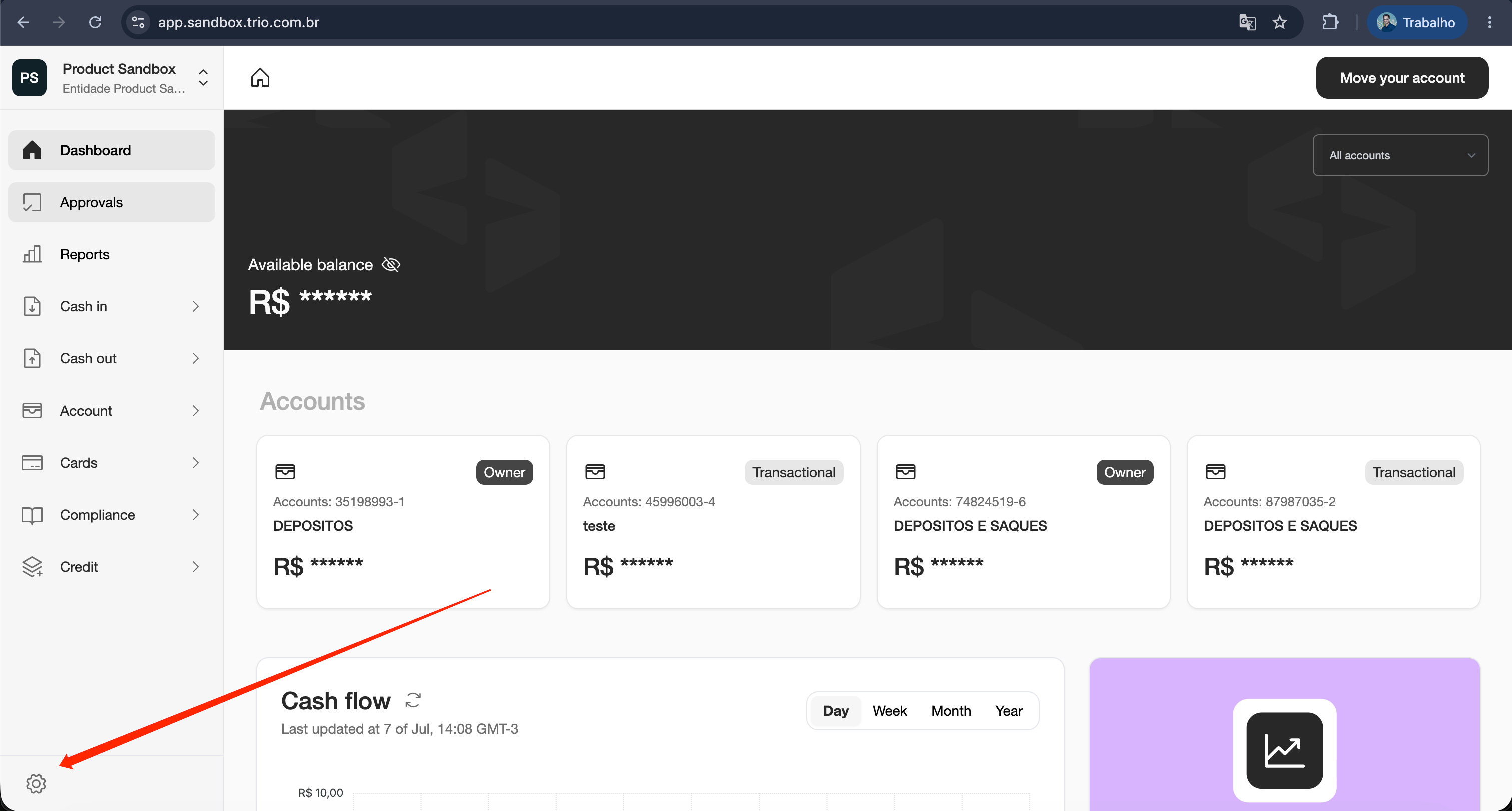
    Image
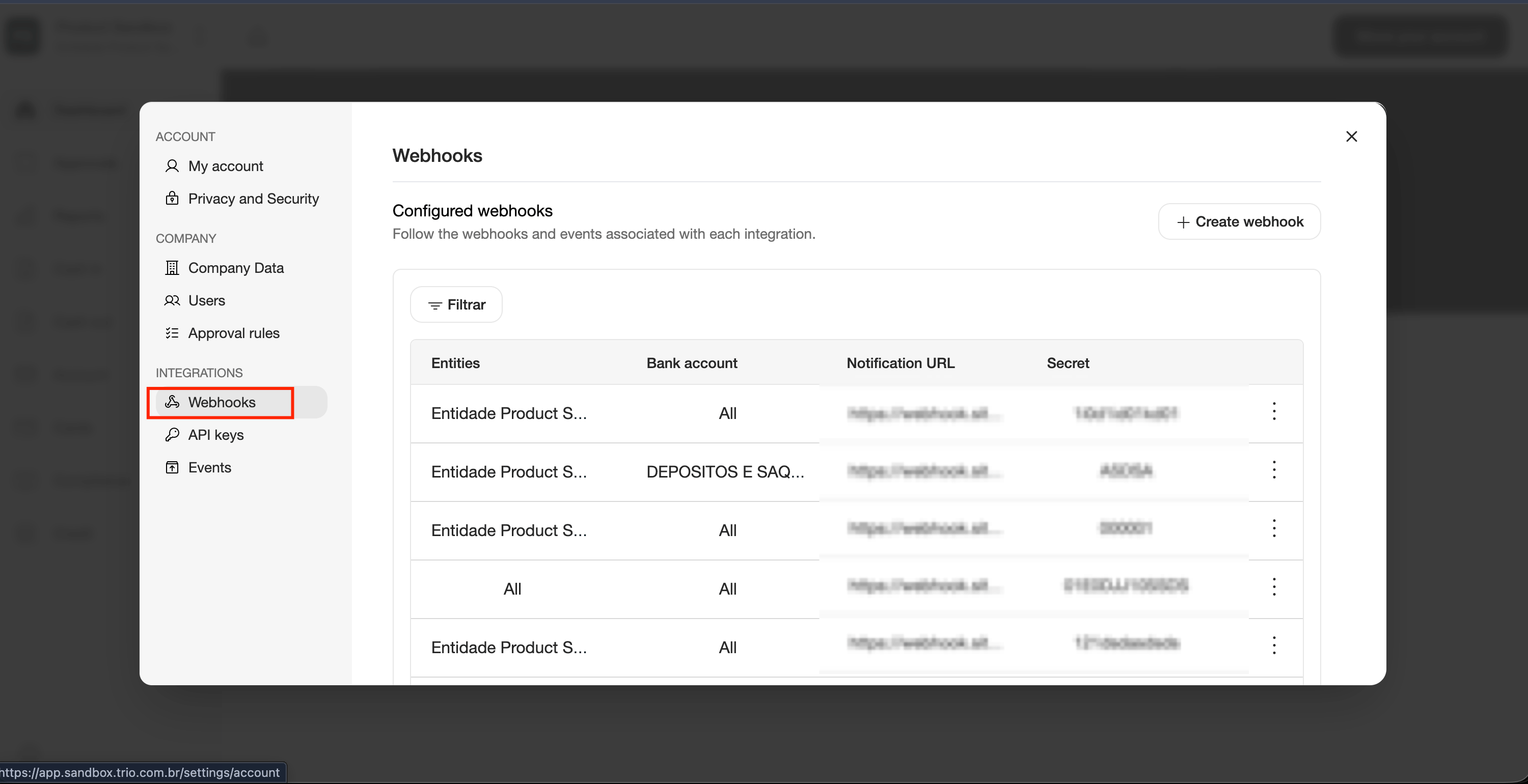
  2. In the dropdown menu, select “Webhooks”;
    Image
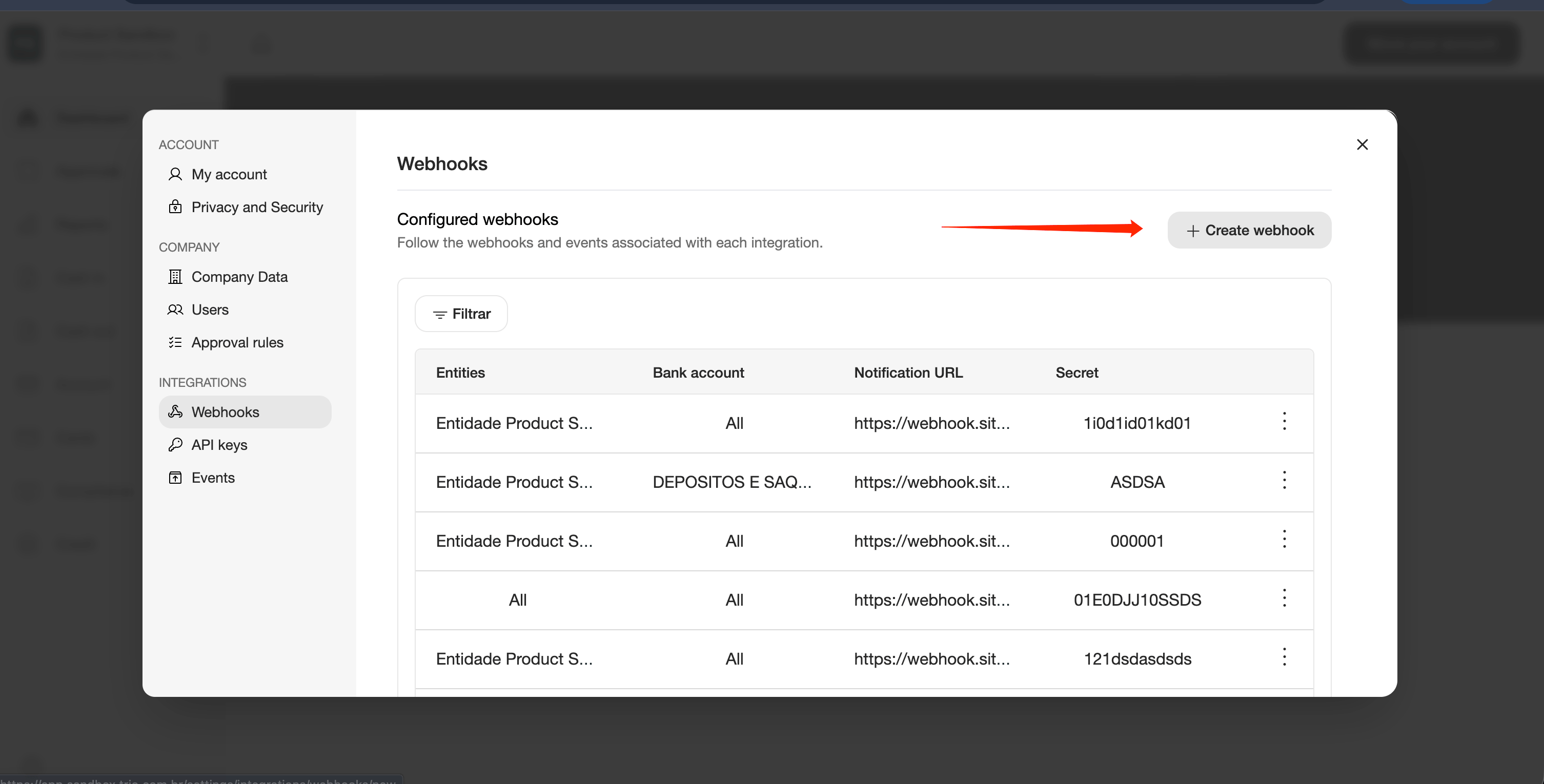
  3. Click “Create Webhook”;
    Image
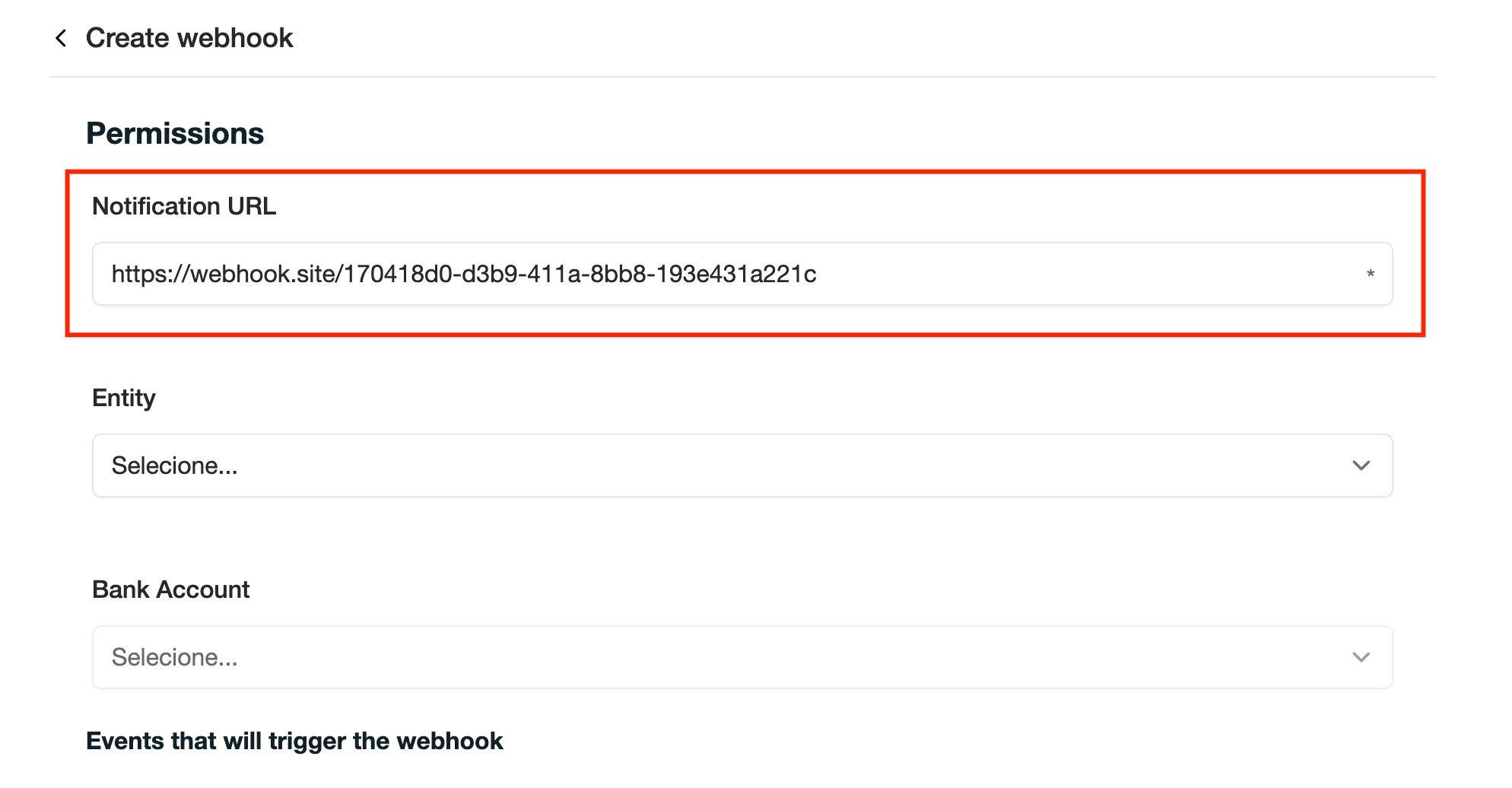
  4. Fill in the Notification URL.
    Image
This is the HTTPS endpoint where Trio will deliver webhook notifications. Make sure your endpoint is publicly accessible and capable of receiving HTTP POST requests.
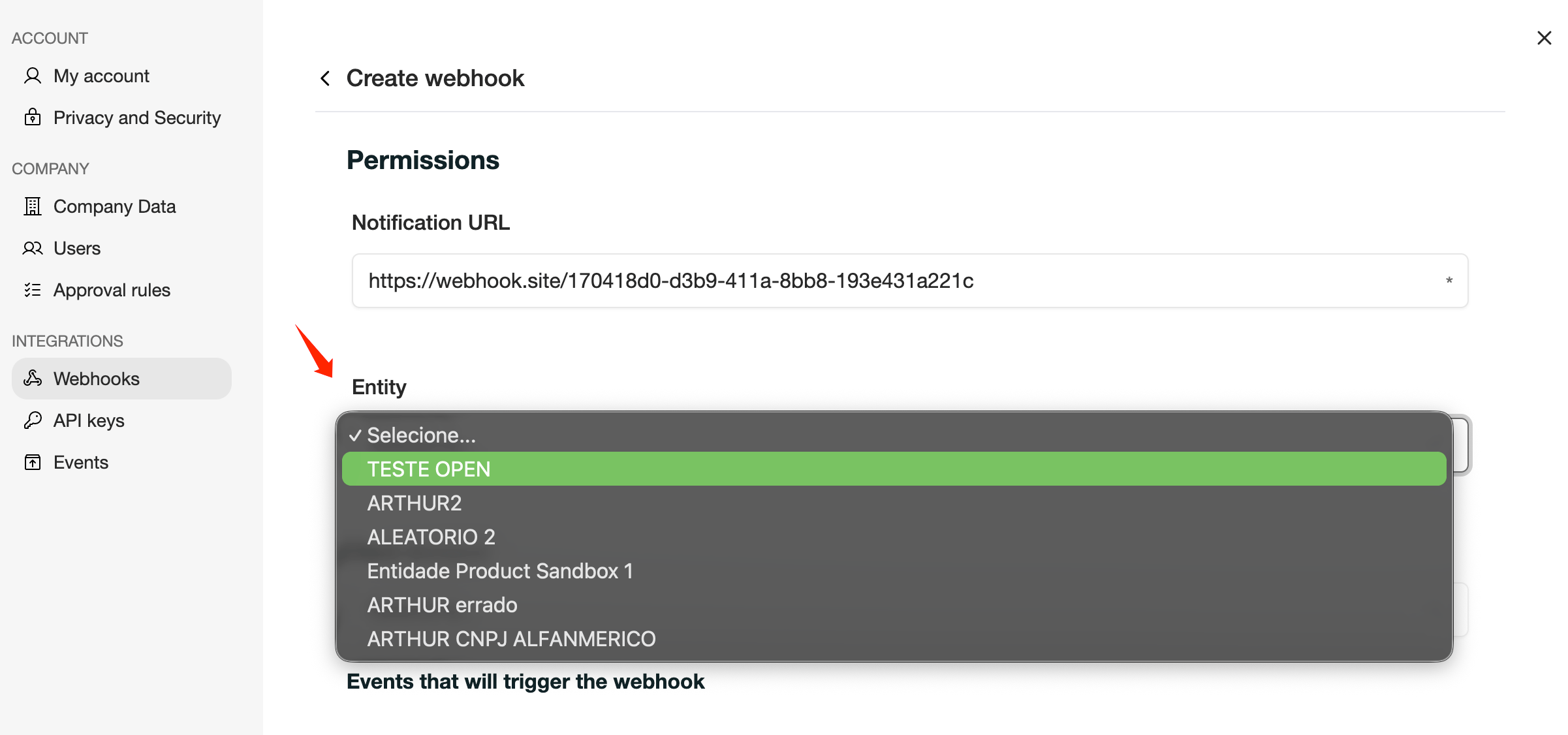
  1. (Optional) Select an Entity.
    Image
If you leave this field empty, the webhook will receive events from all entities in your account. If you select a specific entity, the webhook will only receive events related to that entity.
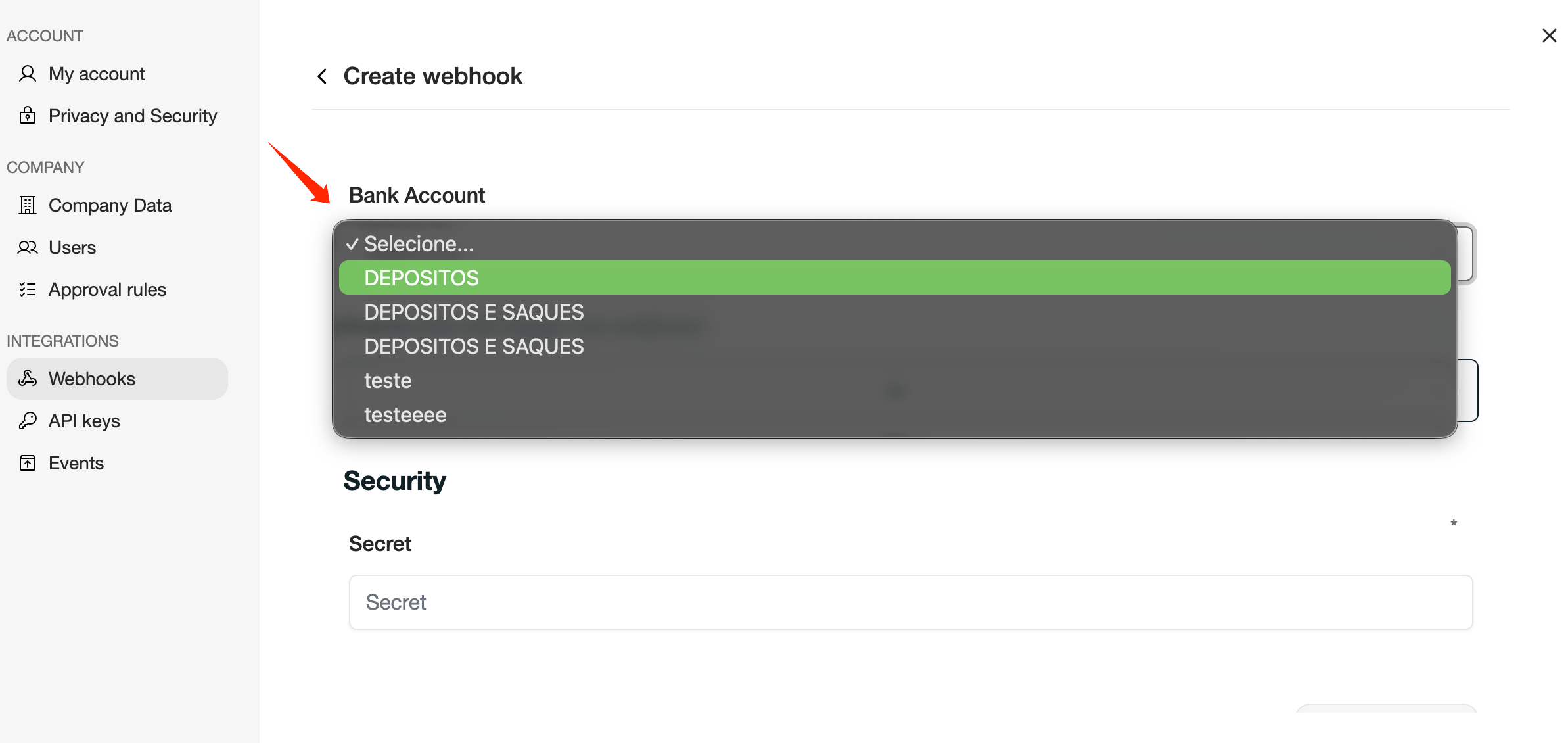
  1. (Optional) Select a Bank Account.
    Image
After selecting an Entity, you can further filter notifications by choosing one of its Bank Accounts. Only events generated by that Bank Account will be delivered to this webhook.
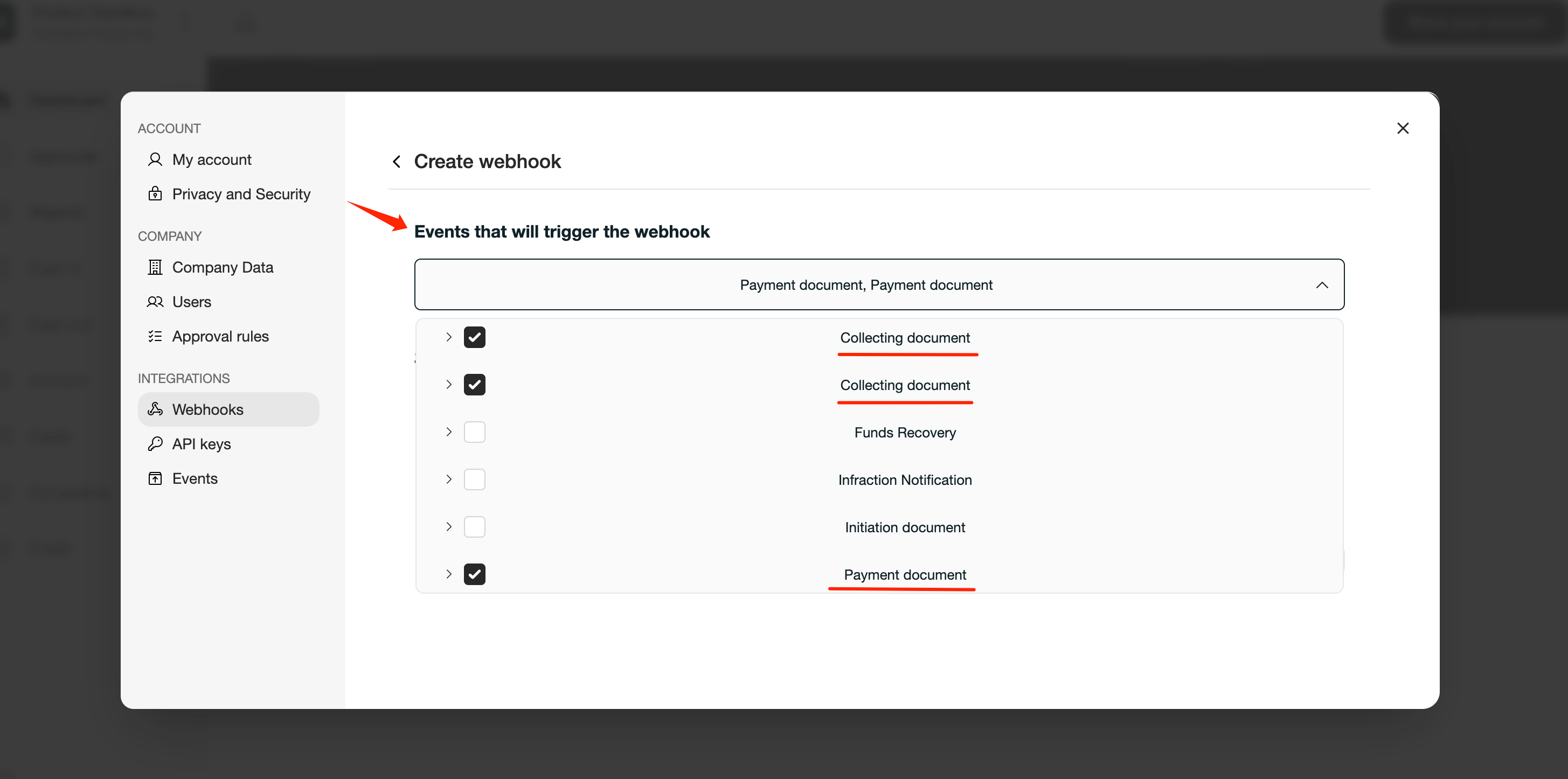
  1. Select the Events that will trigger the webhook.
    Image
Choose the event types your application should receive. For most Pix integrations, the recommended events are:
  • Payment Document (Pix Cash Out)
  • Collecting Document (Pix Cash In)
You can also subscribe to any other events that are relevant to your integration.
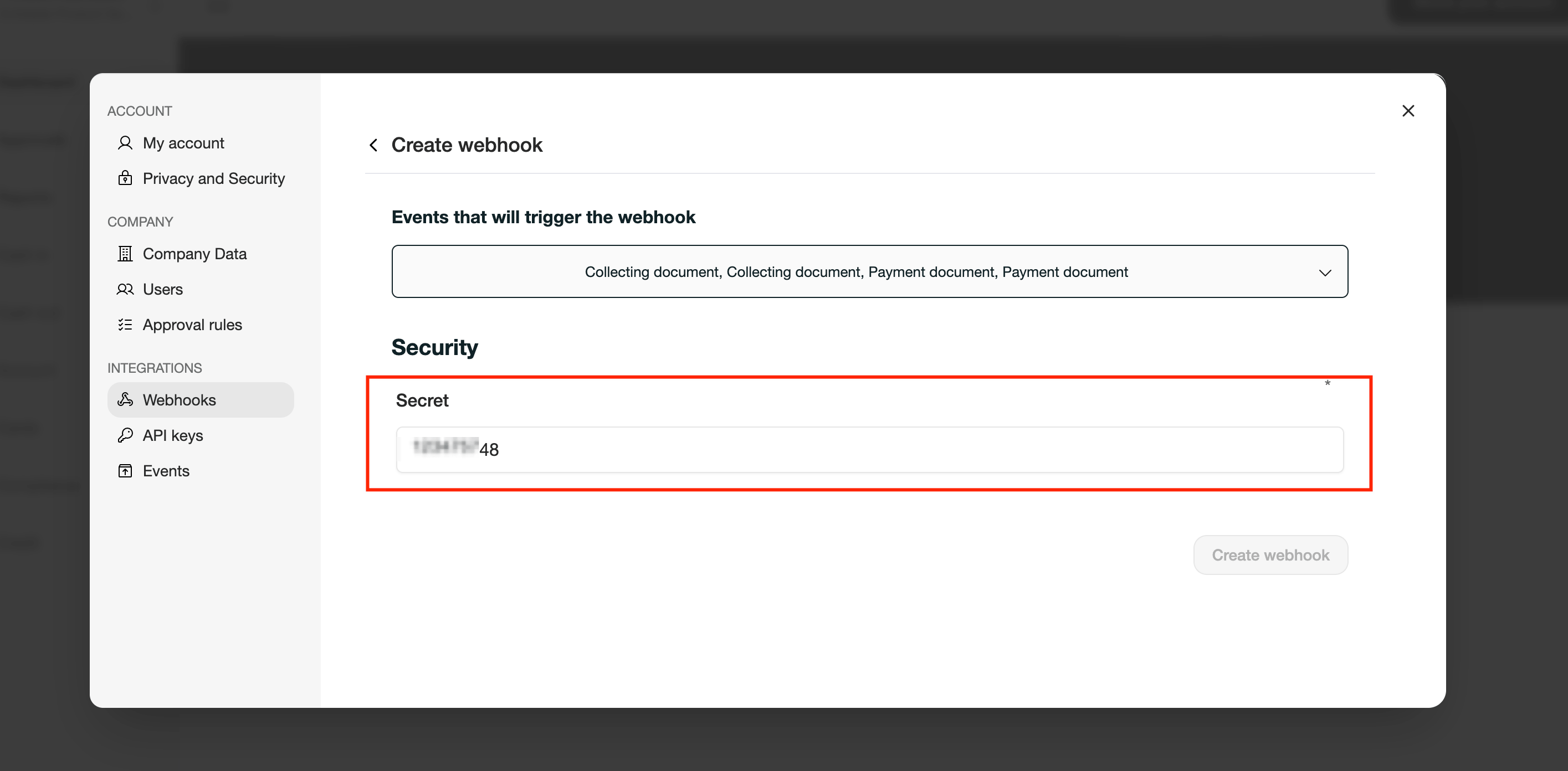
  1. Enter a Secret.
    Image
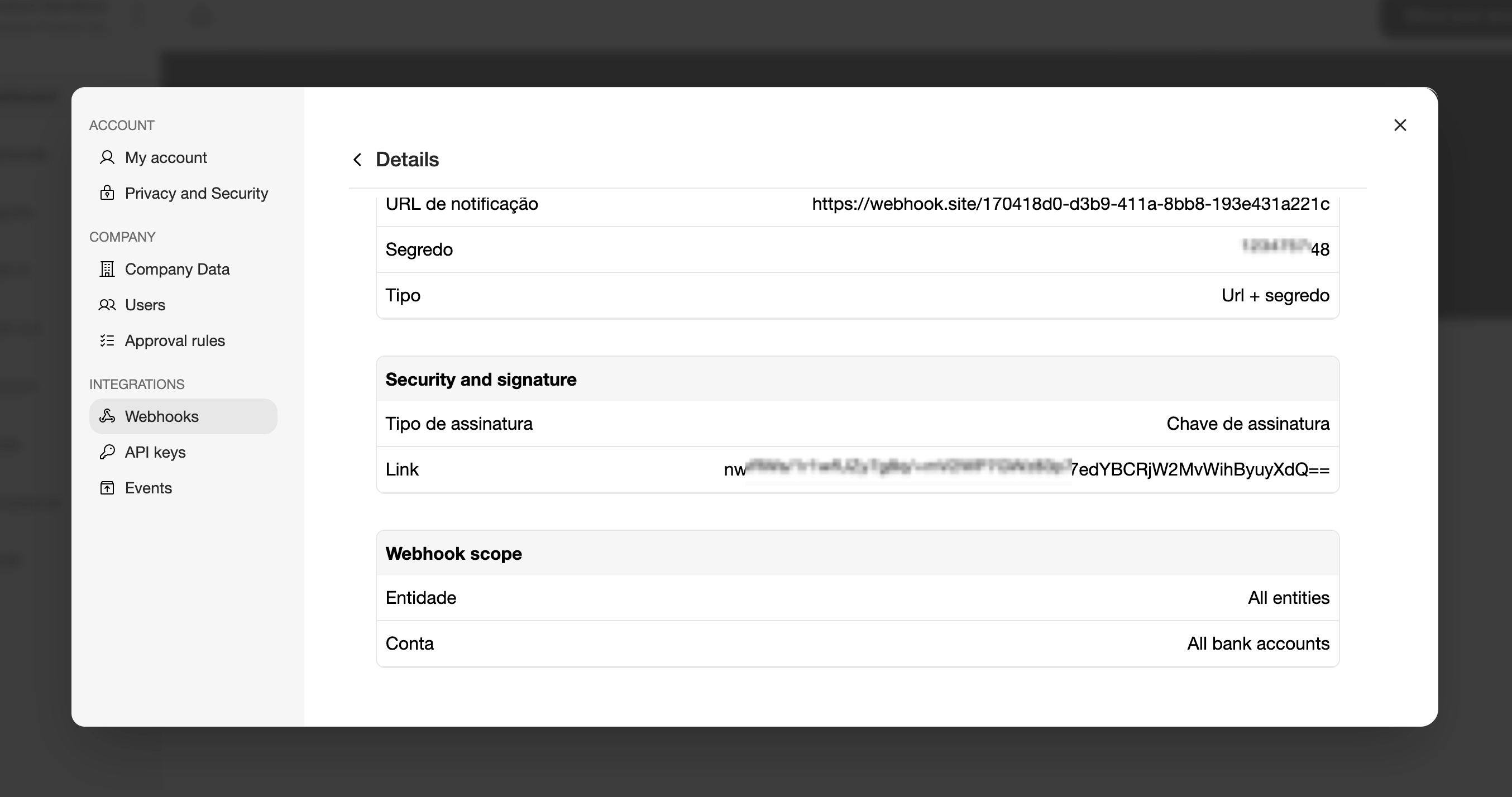
You can also subscribe to any other events that are relevant to your integration. Enter a Secret. Choose any secret value that only your application knows. This value is used by Trio to generate a unique signing key for your webhook. Whenever a webhook is delivered, Trio includes HTTP header: x-webhook-signature – contains the HMAC-SHA256 signature of the request body. Your application should compute the HMAC-SHA256 hash of the received payload using the webhook signing key available in the webhook details page, then compare it with the value received in x-webhook-signature. If both signatures match, you can safely verify that:
  • the request was sent by Trio;
  • the payload was not modified during transmission.
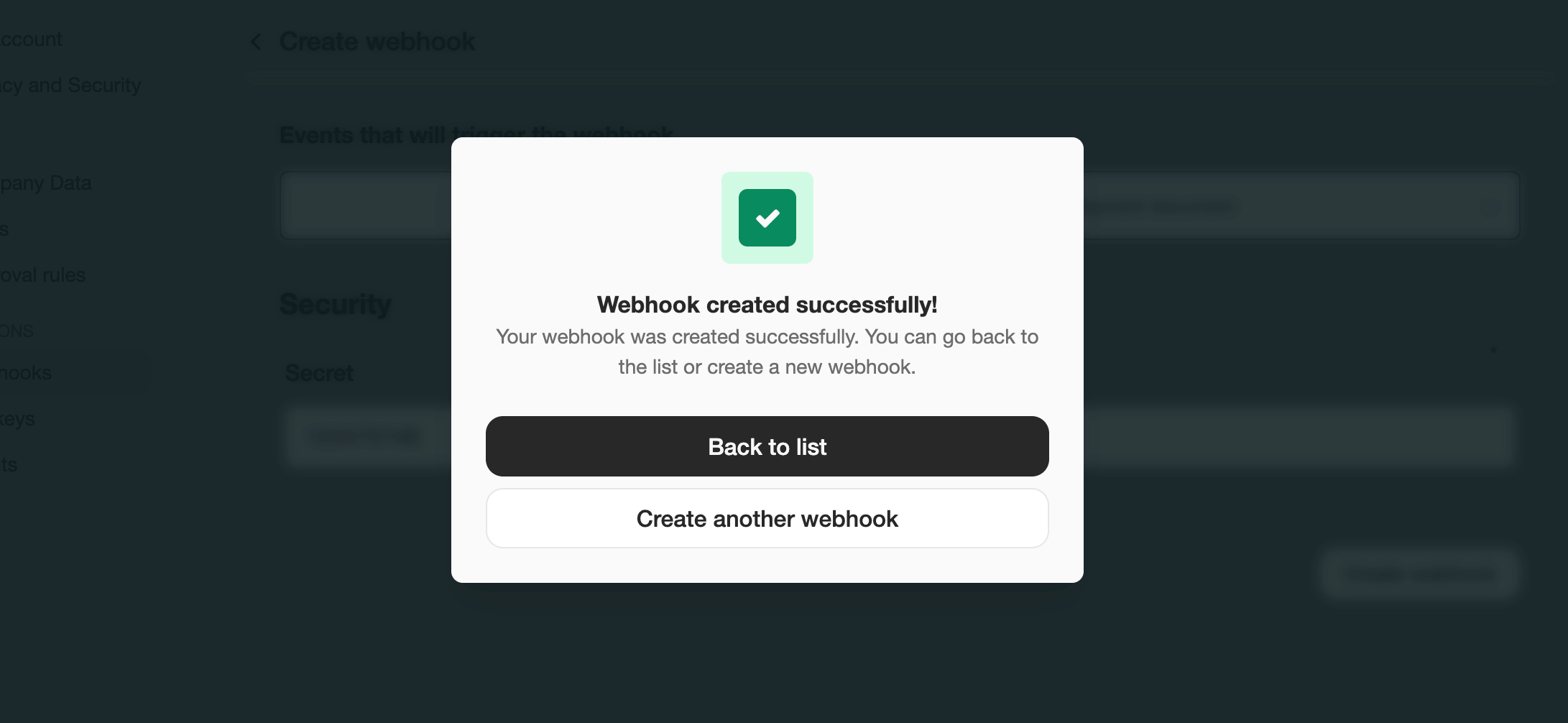
  1. Click Save Webhook.
    Image
  2. Save the webhook secret in details
    Image
Your webhook is now active and ready to receive notifications. For more information about webhook payloads, events, and signature validation, see the Webhooks documentation. Webhook Documentation